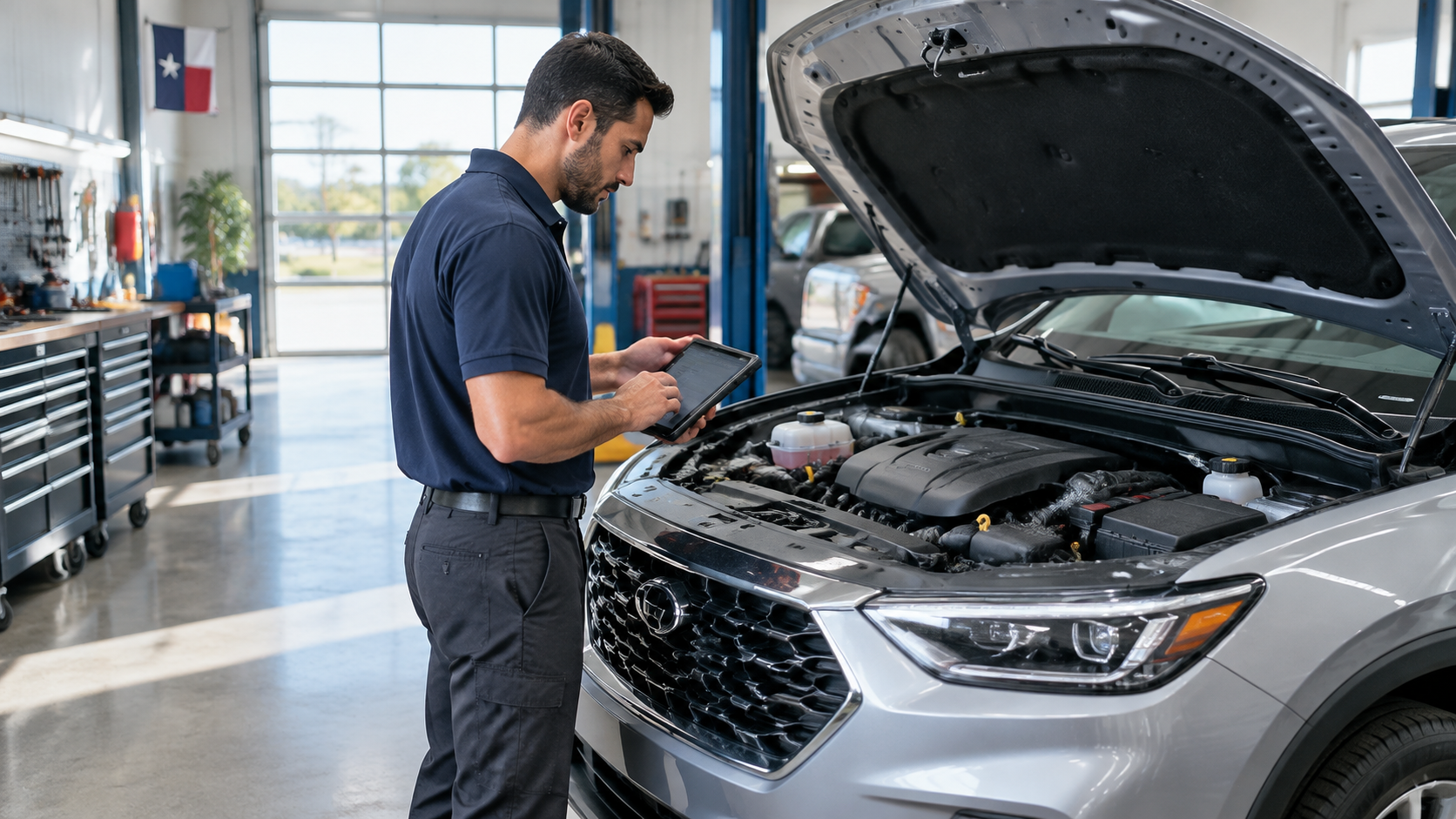
Look for inconsistent panel gaps, paint differences, disturbed fasteners, unusual welds, and restraint-system warnings. Compare physical evidence with repair records and vehicle history. These clues can justify further investigation, but none alone proves unsafe accident damage.
Tap each item as you review it.
A practical way to approach how to check a used car for accident damage
Find patterns
Compare several adjoining panels rather than judging one mark.
Compare panels in consistent light
Walk around a clean, dry vehicle in daylight and compare adjacent panels from several angles. Look for differences in color, texture, gloss, and reflected straight lines. Overspray on weatherstripping or trim, sanding marks, and abrupt paint edges can suggest refinishing. Replacement glass or lamps may also be worth discussing with the seller.
Check hood, door, and trunk gaps for consistency, then open and close each panel normally. A mismatched gap can result from adjustment, manufacturing variation, or previous repair. Avoid turning one cosmetic clue into a diagnosis; the pattern across multiple areas matters more than an isolated paint difference.
Look beyond the visible bodywork
Accessible bolt heads, seam sealer, welds, trunk floors, and engine-bay structures may show evidence of repair. Fresh undercoating can conceal an area, but it can also be legitimate maintenance. Ask what was repaired and request photographs, invoices, and alignment documentation rather than assuming the appearance reveals the full extent of damage.
Never crawl beneath a vehicle supported only by a jack. Structural assessment often requires safe lifting access, model-specific knowledge, and sometimes measurement equipment. An ordinary inspection may identify suspicious areas without determining whether the structure meets manufacturer repair specifications. That question belongs with a qualified collision-repair specialist.
Evaluate restraints and driving symptoms
Observe the airbag warning indicator during startup and note whether it behaves as described in the owner’s manual. Inspect accessible seat belts for damage and unusual operation. Missing warnings do not prove that airbags, pretensioners, or related electronics are correct; concealed components require methods beyond a casual visual check.
During an authorized road test, note steering-wheel position, pulling, vibration, and unusual wind noise. Tire condition, road crown, alignment, and suspension wear can produce similar symptoms. Do not use aggressive maneuvers to test structural integrity, and do not assume that driving straight rules out previous collision damage.
Judge repair quality and unresolved risk
A documented cosmetic repair is different from an undocumented structural repair. Compare the seller’s description with the evidence and ask what remains uncertain. If structural integrity, restraint operation, or advanced driver-assistance calibration is in doubt, pause the purchase for appropriate specialist evaluation. A discount does not resolve a safety question.
Questions answered about how to check a used car for accident damage
Does a clean history report prove no accidents?
No. Unreported incidents and privately paid repairs may not appear. Use history information alongside physical inspection and repair documentation.
Should I reject every repainted vehicle?
Not necessarily. Refinishing may address cosmetic damage. The important questions are what happened, how it was repaired, and whether safety or value is affected.
Can a paint meter prove structural damage?
No. Paint-thickness readings can help identify refinishing on compatible surfaces, but material differences and factory variation affect readings. They do not establish structural repair quality.