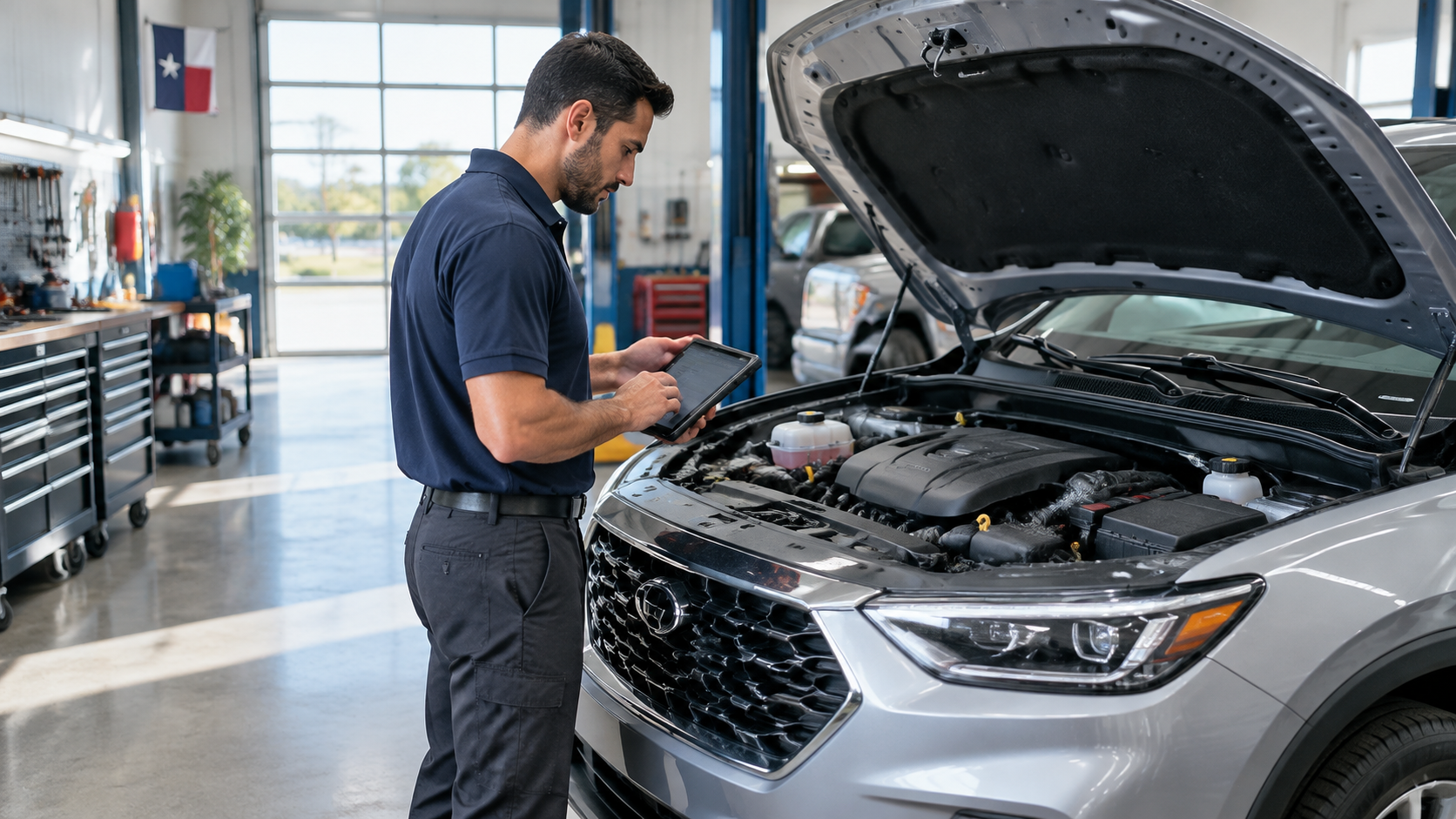
Inspect the ground, accessible components, and fluid levels using the manufacturer’s procedure, then recheck after an authorized drive. Note the location and rate of leakage, but do not identify a fluid or failed part from color alone.
Tap each item as you review it.
A practical way to approach how to check a used car for fluid leaks
Locate
Document the ground spot and accessible wet components without unsafe access.
Start with a cold, safely parked vehicle
Park on level ground, set the parking brake, and inspect beneath the vehicle without crawling under it. Ask whether it has been moved recently or the engine bay has been washed. A clean parking space offers useful evidence, but a vehicle parked elsewhere may have left its drips behind.
Use a flashlight to examine accessible areas around the engine, cooling system, transmission, and reservoirs. Follow the owner’s manual for level checks; some systems require particular temperatures or professional equipment. Never open a hot cooling system, reach near moving belts or fans, or touch high-voltage components to investigate suspected leakage.
Use location and behavior, not color alone
Air-conditioning condensation can produce clear water beneath an otherwise healthy vehicle. Other fluids vary in color with formulation, age, and contamination, so a red, brown, or green spot is not a definitive diagnosis. Photograph the location and note odor from a safe distance without tasting or deliberately handling any fluid.
A leak can travel along a housing, crossmember, shield, or undertray before reaching the ground. The lowest wet point may not be the source. Underbody covers can also retain fluid and delay visible dripping. An inspector should distinguish a suspected origin from a confirmed source and explain when cleaning or further testing is necessary.
Describe severity without minimizing risk
A lightly damp seal and a fresh, recurring drip are different observations, but neither should be judged without context. Identify the system involved, fluid level, nearby components, and evidence of progression. Fluid near brakes, tires, hot exhaust surfaces, or electrical equipment can warrant concern even when the visible quantity appears small.
Low fluid does not automatically prove an external leak. Consumption, internal leakage, incorrect servicing, or normal system behavior may be involved, depending on the fluid and vehicle. Repeated top-offs deserve an explanation. Ask for invoices and the seller’s experience rather than accepting a recently filled reservoir as evidence that the underlying problem is resolved.
Recheck after operation and price diagnosis
If the vehicle is safe to drive, inspect again after a permitted road test because heat and operating pressure can change leakage. Stop for overheating, oil-pressure warnings, a fuel odor, or impaired braking. Repair estimates should reflect confirmed access and repair scope; a suspected inexpensive seal can require substantial labor or prove to be a different fault.
Questions answered about how to check a used car for fluid leaks
Is water beneath the car always normal?
No. Air-conditioning condensation is common, but location, odor, system levels, and operating conditions matter. Investigate unfamiliar puddles rather than assuming all clear liquid is harmless.
Does a freshly cleaned engine mean a leak was hidden?
Not necessarily. Cleaning may be routine preparation. It does reduce visible historical evidence, making an operating-temperature recheck and clear inspection limitations especially useful.
Can a buyer tighten a leaking fitting?
Avoid attempting repairs during an evaluation. Incorrect tightening can damage components or create a safety problem, and the actual source may be elsewhere.