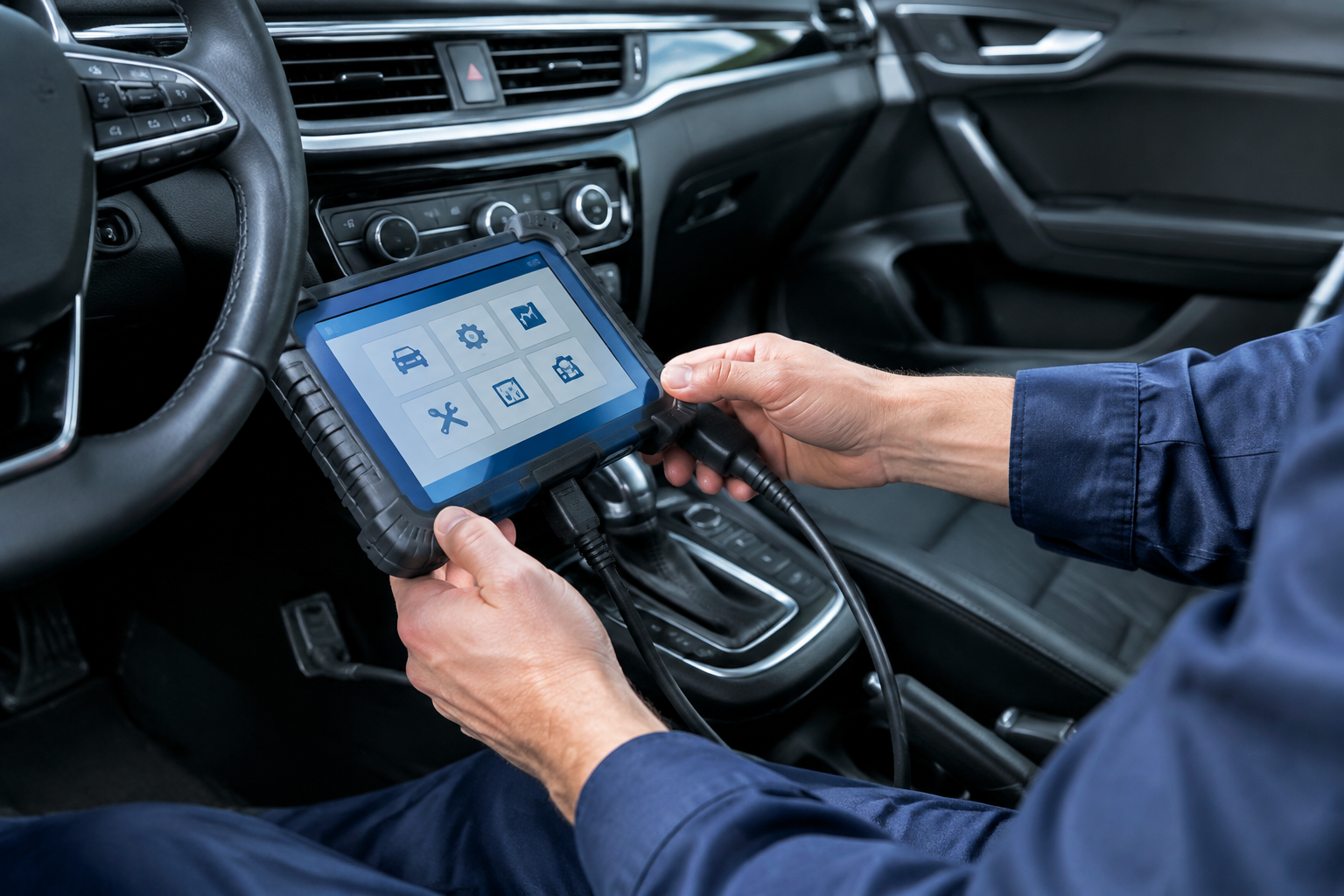
Check all tires for tread wear, age, damage, and correct fitment, then assess brake warnings, pedal behavior, noises, and accessible components. Visible condition and a short drive cannot establish remaining brake life without appropriate measurements.
Tap each item as you review it.
A practical way to approach used car tires and brakes checklist
Inspect stationary
Check tire surfaces, specifications, and visible brake components.
Inspect more than the outer tread
Examine each tire across its full tread width where safely accessible. Inner-edge wear can be easy to miss when the wheels point straight ahead. Look for exposed cords, bulges, deep cuts, cracking, and embedded objects. A tire can have substantial center tread yet still need replacement because of damage or uneven wear.
Measure tread depth in multiple grooves and positions rather than relying only on a quick glance. Uneven wear may relate to inflation, alignment, suspension condition, or previous use. It is a clue requiring investigation, not proof of one failed part. A newly installed tire can also obscure a vehicle’s earlier wear pattern.
Check age, specifications, and pressure
Read the tire date code and compare tire sizes and load specifications with the vehicle placard and manufacturer guidance. Tire aging matters even when mileage is low. Follow the vehicle and tire manufacturers’ replacement recommendations; there is no universal visual test that proves an older tire is safe for continued use.
Use the vehicle placard’s recommended cold pressure, not the maximum pressure molded into the sidewall. Different front and rear sizes may be intentional on some vehicles. Conversely, mismatched rolling circumference can matter on certain all-wheel-drive systems. Confirm the correct setup before treating a mismatch as harmless or automatically ordering replacements.
Separate brake symptoms from measurements
Before moving, observe brake and ABS warning indicators and confirm that the pedal feels appropriate for the vehicle. During a safe, permitted drive, note pulling, grinding, pulsation, or unusual pedal travel. These symptoms have several possible causes, so a road test should guide further examination rather than become a parts diagnosis.
Visible pad edges do not always reveal the condition of inner pads, rotor surfaces, calipers, hoses, or parking-brake components. Ask whether wheels were removed and whether pad thickness and rotor measurements were obtained. If access was limited, the report should say so instead of assigning an unsupported remaining-life estimate.
Price complete repairs, not isolated parts
A realistic tire estimate may include mounting, balancing, disposal, and alignment diagnosis. Brake costs depend on measured wear and the actual cause of symptoms. Severe tire damage, fluid leakage near brake components, or abnormal braking deserves prompt professional assessment; do not continue a test drive merely to complete a checklist.
Questions answered about used car tires and brakes checklist
Does a quiet brake system mean the brakes are good?
No. Worn or damaged components may operate quietly. Measurements and inspection of accessible components provide evidence that noise alone cannot supply.
Are four matching tire brands mandatory?
Not universally. Correct size, construction, capability, and manufacturer requirements matter. Some drivetrains also require closely matched tread depth or circumference.
Can the inspection predict exact tire life?
No. Current measurements support a condition assessment, but future mileage depends on use, alignment, inflation, environment, and maintenance.