A used EV inspection should evaluate battery-related evidence, charging operation, accessible underbody condition, and ordinary chassis components. Displayed range is only an estimate; it is not a direct measurement of battery health or a promise of real-world driving distance.
Tap each item as you review it.
A practical way to approach electric vehicle pre-purchase inspection
Gather evidence
Separate battery charge level from battery condition.
Ask what the battery assessment actually measures
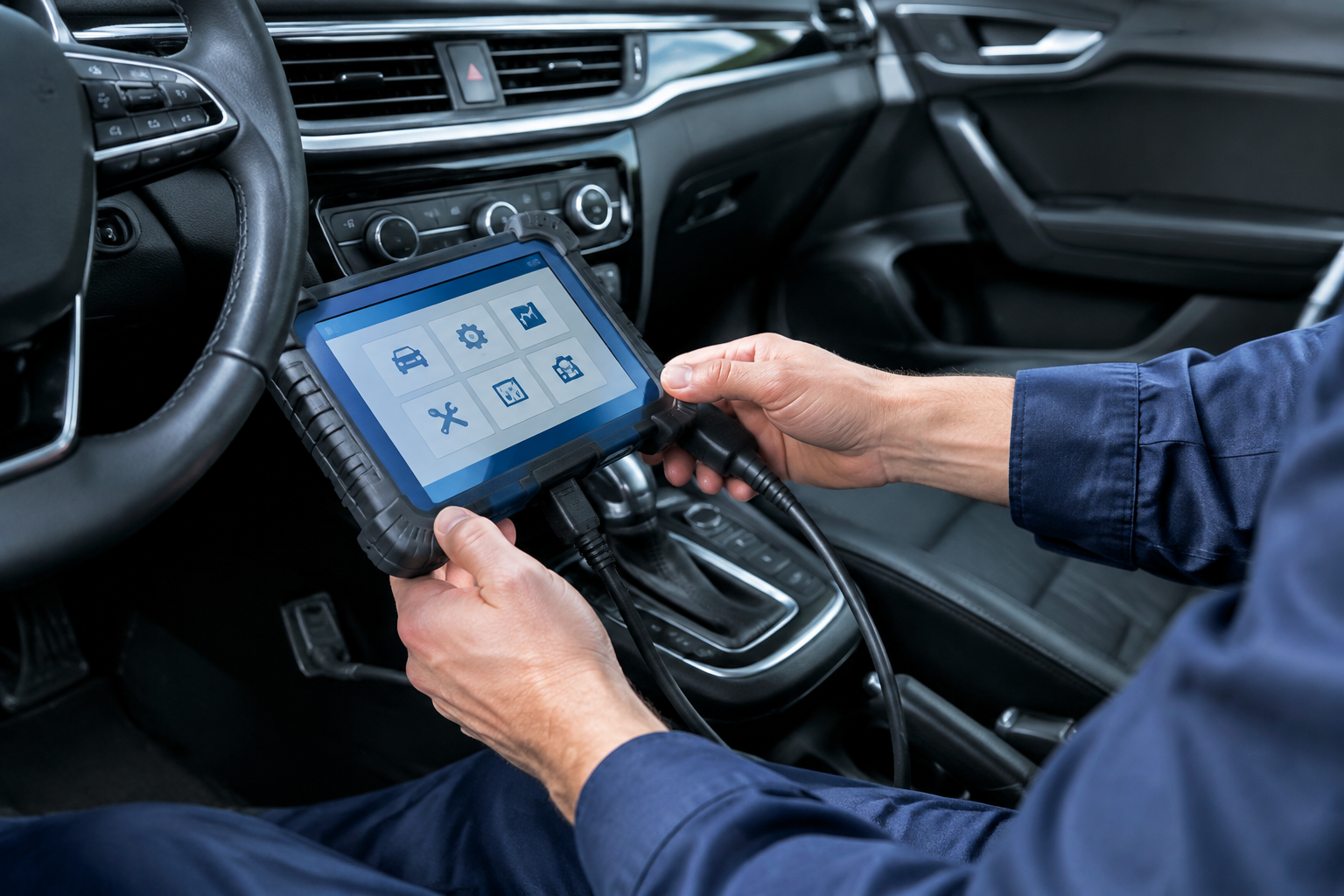
State of charge describes how full the battery is, not how much capacity remains compared with new. A health estimate, diagnostic scan, and controlled capacity test are different assessments. Ask which method is available for the specific vehicle and what assumptions it uses. Temperature, recent driving, and software can affect displayed information, so avoid treating a single screenshot as definitive evidence of condition.
Check charging against your actual routine
Confirm the charging connector, included equipment, and supported charging capabilities for that model and configuration. Where permission and compatible equipment allow, demonstrate charging rather than simply inspecting the port. A successful AC session does not prove DC fast charging works. Verify adapter compatibility and any software or account requirements independently. Home electrical suitability requires a separate assessment; the vehicle inspection does not evaluate your house wiring.
Inspect more than the battery
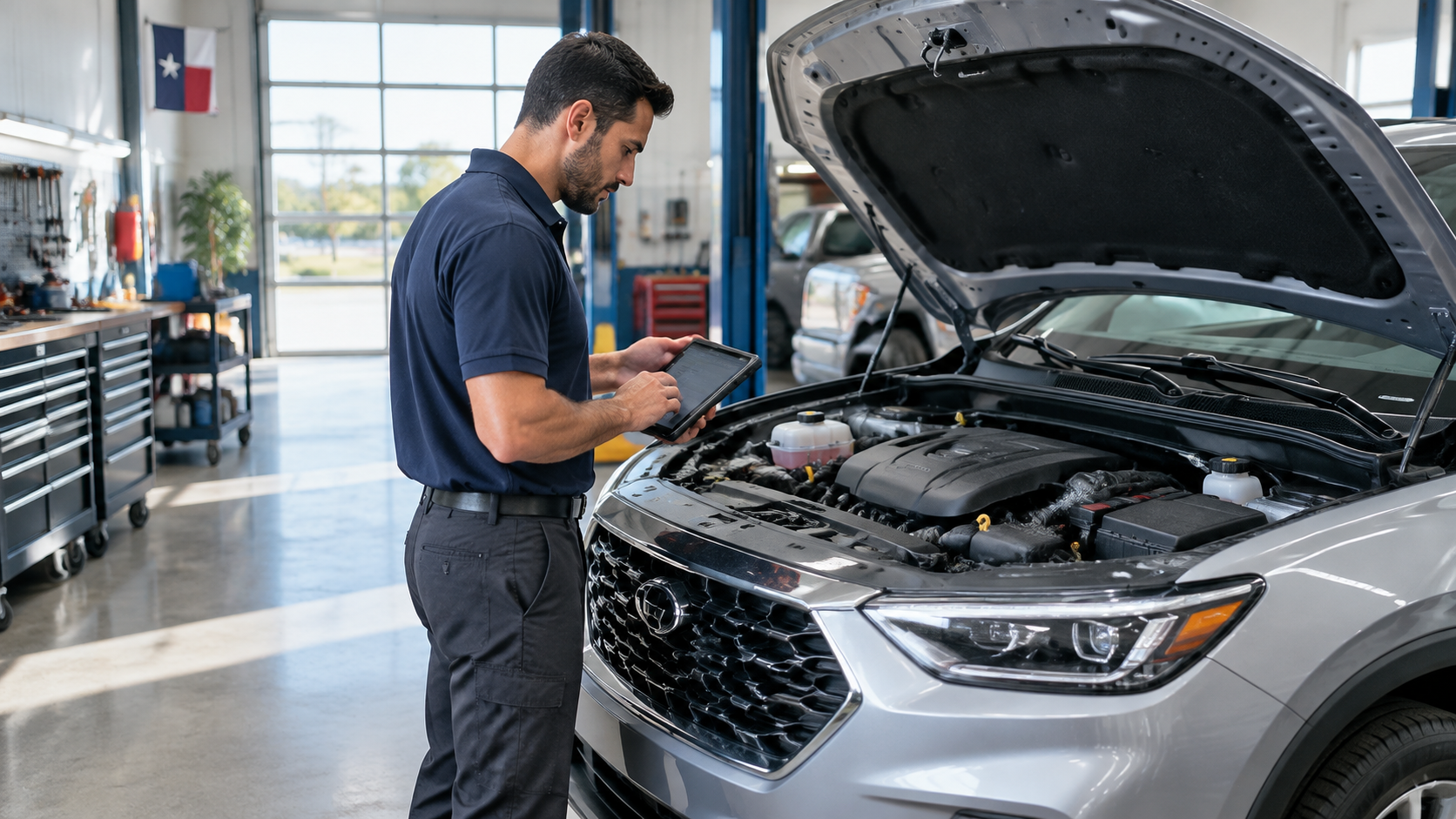
Accessible battery-enclosure areas should be checked for impact evidence, unusual damage, and leaks without opening high-voltage components. Serious damage warrants qualified specialist evaluation. Tires, alignment symptoms, suspension, steering, air conditioning, and friction brakes remain important ownership costs. Regenerative braking does not remove the need for a brake inspection. Confirm whether underbody shields or limited access prevent a useful view of particular areas.
Connect the findings to range and repair risk
Compare your typical routes, highway speeds, weather exposure, and charging access with realistic vehicle capabilities. Verify remaining battery warranty terms, including applicable capacity provisions, rather than assuming all degradation is covered. Dallas Pre Purchase Inspection charges $249 for every buyer inspection package and serves Dallas and cities within 50 miles. Ask about vehicle-specific diagnostic access, available charging demonstrations, and any need for separate battery testing before scheduling.
- Confirm ownership transfer requirements for connected features.
- Request documentation for battery replacement or significant underbody repairs.
Questions answered about electric vehicle pre-purchase inspection
Does a full-charge range display prove battery health?
No. The estimate depends on vehicle algorithms and operating conditions. It should be interpreted alongside records, diagnostics, and any appropriately performed capacity assessment.
Can every inspection include a fast-charging test?
No. Charger availability, location, compatibility, battery conditions, seller permission, and inspection scope can limit whether such a test is practical.
Are EVs maintenance-free?
No. They still need attention to tires, brakes, suspension, cooling systems, and other components according to the manufacturer’s requirements.