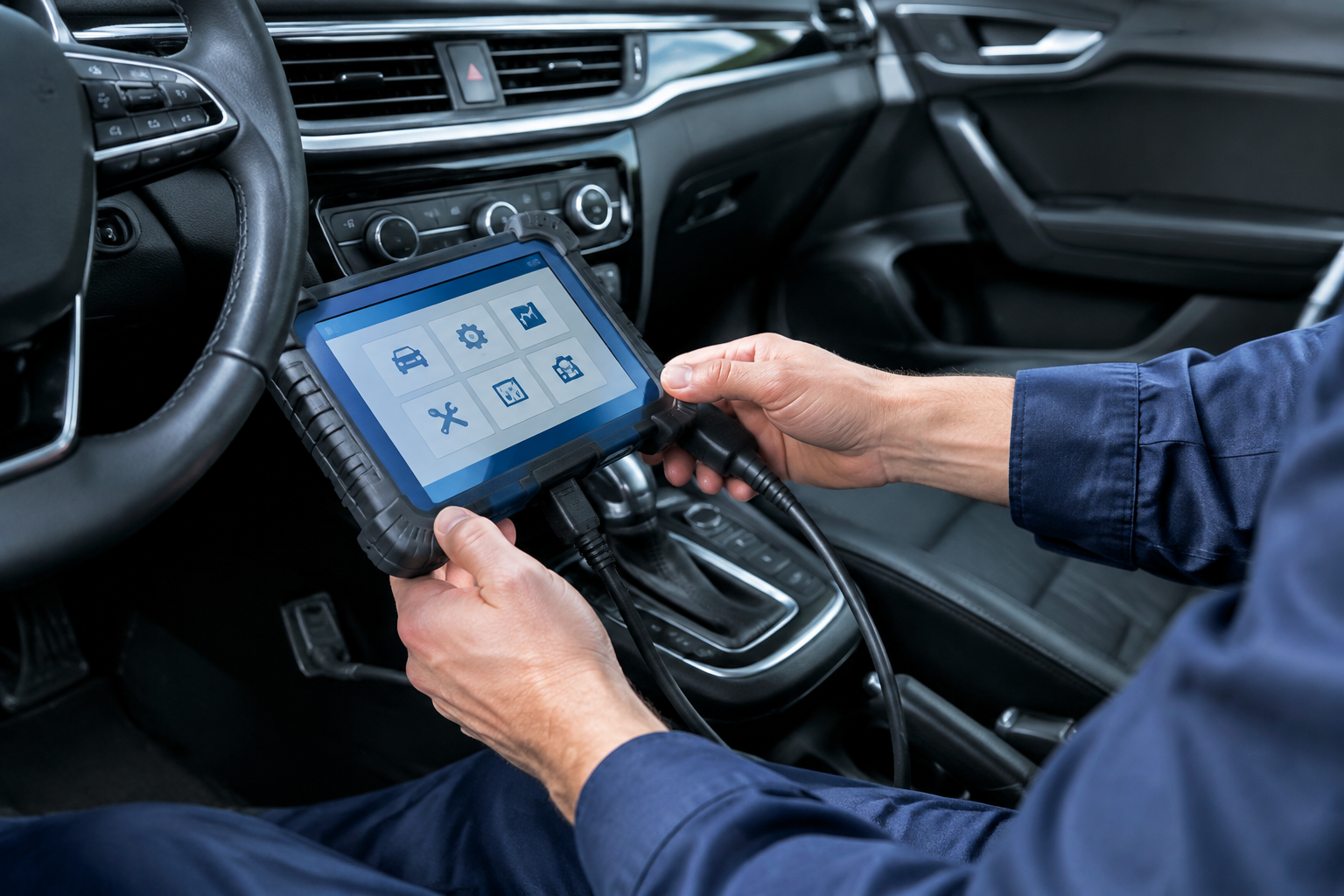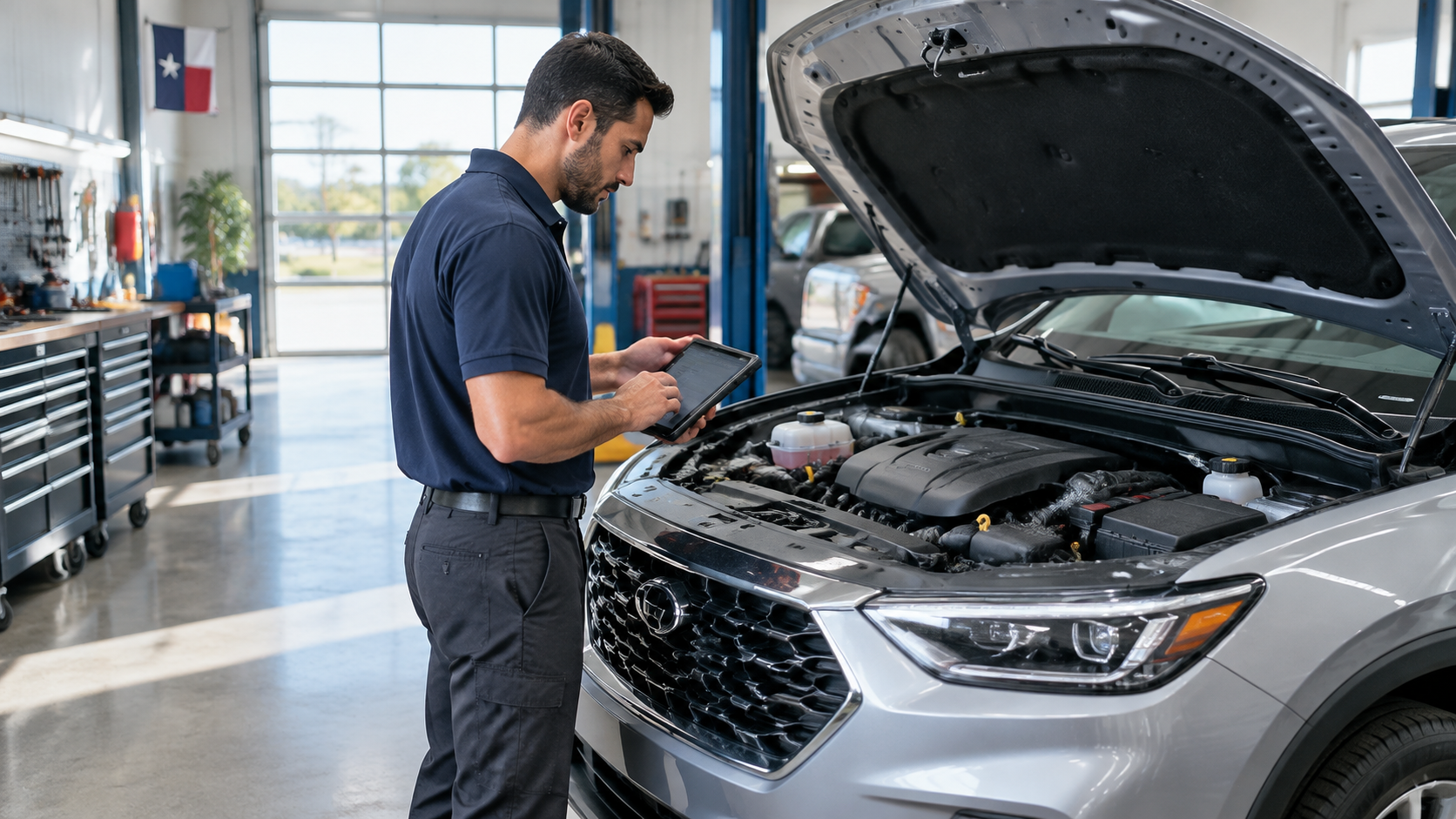
A used SUV or crossover inspection should cover ordinary mechanical condition plus the systems that support your intended use: all-wheel drive, seating, climate control, cargo access, and safety equipment. Verify those features on the actual vehicle rather than relying on the trim badge.
Tap each item as you review it.
A practical way to approach suv and crossover pre-purchase inspection
Check everyday fit
Evaluate passengers, restraints, cargo, and access.
Inspect the features your passengers will use
Operate rear doors, seat-folding mechanisms, liftgate controls, rear climate settings, and accessible seat belts. Check that seats latch securely after being moved. Bring your child restraint to assess fit using both vehicle and restraint instructions; an ordinary purchase inspection is not a substitute for a child-passenger-safety consultation. Advertised seating capacity does not establish that your passengers and cargo will fit comfortably.
Treat tires and AWD as a connected system
Look at all four tires for size, specification, wear, and condition. Some all-wheel-drive systems have particular requirements for tire matching and allowable circumference differences; consult the vehicle manufacturer rather than applying a universal rule. Review service requirements for the transmission, transfer unit, and differentials where fitted. Binding, vibration, or drivetrain warnings need diagnosis, not an assumption that AWD is simply working harder.
Check for leaks and suspension wear
Inspect accessible cargo wells, carpeting, headliner edges, and areas around a panoramic roof for moisture evidence. Stains or odors deserve investigation but do not alone establish flood history. Evaluate steering response, braking, ride quality, and suspension noises during a permitted road test. Larger wheels and adaptive suspension may change replacement costs, so identify the equipment installed before comparing ownership budgets between otherwise similar SUVs.
Verify safety information before deciding
Check the VIN for open safety recalls and ask about collision repairs, sensor replacement, and any required calibration records. A lack of warning lights does not prove every assistance feature is calibrated correctly. Dallas Pre Purchase Inspection charges $249 for every buyer inspection package, serves Dallas and cities within 50 miles, and is open daily 7:00am–11:45pm. Confirm which systems and access conditions apply to your inspection.
- Test rear-seat air delivery instead of checking only dashboard vents.
- Assess cargo space with the seating configuration you will actually use.
Questions answered about suv and crossover pre-purchase inspection
Is AWD the same as four-wheel drive?
No. Designs and operating instructions differ. Identify the specific system and follow the manufacturer’s guidance rather than relying on general labels.
Can an inspection confirm child-seat compatibility?
It can identify accessible anchors and obvious concerns, but proper installation depends on the specific restraint, seating position, and both sets of instructions.
Does a clean interior rule out water damage?
No. Cleaning can remove visible clues, and some areas are concealed. Records, odors, corrosion patterns, and accessible hidden spaces provide additional context.