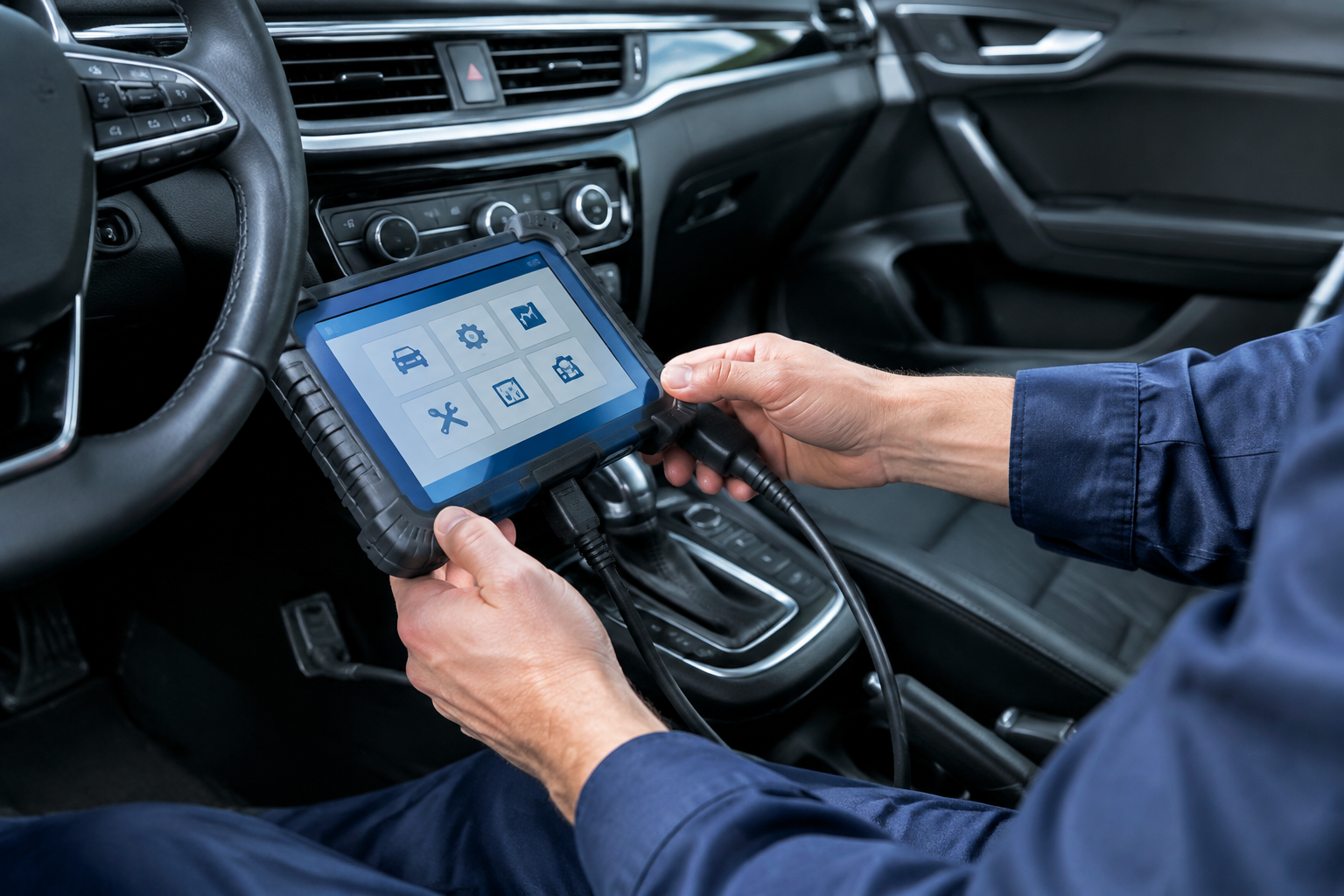
Diagnostic trouble codes identify conditions a vehicle’s control modules have detected; they do not automatically identify the failed part. Before buying, interpret codes alongside warning lights, readiness status, symptoms, service information, and physical inspection findings. An empty code list is not a clean bill of health.
Tap each item as you review it.
A practical way to approach what diagnostic trouble codes mean when buying a car
Read
Capture codes, status, and readiness information.
Read the fault description, not a parts-shopping list
A code may describe a circuit, operating condition, or performance problem involving several possible causes. For example, a misfire can relate to ignition, fuel delivery, compression, wiring, or another issue. Replacing the component mentioned in a generic description may not correct the underlying problem.
Vehicle-specific service information matters. The same broad symptom can require different diagnostic steps across engines and model years. Ask what evidence supports a conclusion and whether further testing is necessary before treating a suggested repair as established.
Understand status and emissions readiness
Scanners may distinguish confirmed, pending, and permanent emissions-related codes. Their meanings and clearing behavior differ. Readiness monitors indicate whether supported emissions self-checks have completed; incomplete monitors can follow battery disconnection, code clearing, repairs, or insufficient driving under the required conditions.
Incomplete readiness does not prove that a seller concealed a problem. It does reduce the available evidence. Ask about recent work and consider whether additional driving and a repeat scan are appropriate before purchasing. Never assume a warning light will stay off simply because it is off today.
Know what the scan actually covered
A basic emissions reader may not access every module in a vehicle. Brake, airbag, body, transmission, or manufacturer-specific information can require different equipment and software coverage. Even a broader scan may have communication limits, unsupported functions, or inaccessible modules.
Ask which systems were checked and whether any failed to communicate. A code-free engine scan says little about tire damage, corrosion, fluid leakage, worn suspension, or repair quality. Electronic evidence is valuable precisely when its scope and limitations are made clear.
Translate scan results into a purchase decision
Record the exact codes, their status, symptoms, and relevant operating conditions. Seek a repair estimate only after enough diagnosis exists to support one. An unresolved intermittent fault can present a different financial risk from a documented repair with a successful follow-up check.
A buyer inspection should connect electronic findings to the rest of the vehicle rather than produce an unexplained printout. Dallas Pre Purchase Inspection charges $249 for every buyer inspection package. Confirm diagnostic coverage for the specific vehicle before booking, especially for uncommon or highly specialized systems.
Questions answered about what diagnostic trouble codes mean when buying a car
Does clearing a code fix the problem?
No. Clearing removes some stored information but does not repair the cause. A fault may return only after the system runs its checks again.
Is a permanent code proof of an active failure?
Not by itself. Permanent emissions codes can remain after repairs until the vehicle verifies the relevant system. Interpret them with current symptoms and other scan data.
Can a car have problems without any codes?
Yes. Many mechanical, structural, cosmetic, and intermittent problems do not produce a readable trouble code.